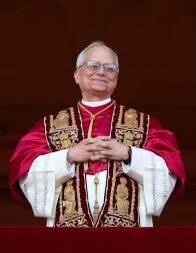
Returning to the homeland of one of the Church’s most celebrated missionaries, Pope Leo XIV paid tribute to St. Frances Xavier Cabrini on Saturday, presenting her life and legacy as a model for addressing one of the defining challenges of the modern world: migration.
The Pope’s visit to Sant’Angelo Lodigiano, a small Lombard town south of Milan, formed part of his pastoral journey to nearby Pavia. The visit carried particular symbolic significance. It was here, in 1850, that Francesca Cabrini was born before embarking on a life of mission that would take her across the Atlantic and eventually to Chicago, where she died in 1917. Canonised in 1946, she became the first saint of the United States and was later named Patroness of Migrants.
Speaking during a moment of Eucharistic Adoration and the veneration of the relic of Cabrini’s heart in the Church of St. Antonio Abate and Santa Francesca Cabrini, Pope Leo reflected on the saint’s enduring relevance for the Church today.
“I am here to pay homage to Mother Cabrini,” the Pope told the faithful gathered in the church, greeting local civic and religious authorities, including Bishop Maurizio Malvestiti of Lodi.
Connection with Chicago
St Cabrini spent the final years of her life in Chicago, the city where Pope Leo XIV was born and raised. Recalling this connection, he thanked the people of Sant’Angelo Lodigiano for their warm welcome and praised the deep affection that the local Church has always shown toward the Successor of Peter—an affection that Cabrini herself embodied through what he described as her singular devotion and obedience to the Pope.
As a young religious sister, Cabrini had dreamed of becoming a missionary in China, inspired by St. Francis Xavier. Yet when she sought guidance from Pope Leo XIII regarding the future direction of the Missionary Sisters of the Sacred Heart of Jesus, the answer was unexpected. Rather than sending her eastward, the Pope instructed her to go “not to the East, but to the West.”
At the time, millions of Italians were leaving their homeland in search of a better future overseas, particularly in the Americas. Encouraged by Leo XIII and by St. John Baptist Scalabrini, another great apostle of migrants, Cabrini recognised in this movement of peoples one of the great pastoral challenges of her age.
Pope Leo: St Cabrini’s mission to migrants remains urgent today
21 Sunday Jun 2026
NEWS