Reporting by Crispian Balmer; Editing by Jan Harvey
Pope Leo decries Sudan violence, urges dialogue and relief effort
03 Monday Nov 2025
NEWS
03 Monday Nov 2025
NEWS
Reporting by Crispian Balmer; Editing by Jan Harvey
02 Sunday Nov 2025
NEWS
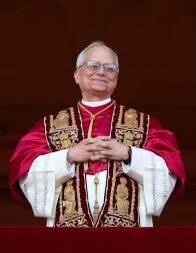
Pope Leo XIV on Sunday appealed for a ceasefire, the intervention of the international community and the opening of humanitarian corridors and aid delivery in war-ravaged Sudan.
“With great sorrow, I am following the tragic news coming from Sudan, particularly from the city of El Fasher in the afflicted northern Darfur region,” Pope Leo said during the Angelus address.
He decried the “Indiscriminate violence against women and children, attacks on unarmed civilians, and serious obstacles to humanitarian action,” that he said, “are causing unacceptable suffering to a population already exhausted by long months of conflict.”
Pope Leo’s words of concern over the ongoing violence in Sudan, and his particular reference to the onslaught in the city of El Fasher in North Darfur, come in the wake of a siege of the city where militias are reportedly committing grave atrocities against the civilian population.
He invited the faithful to pray for victims and urged responsible parties to halt hostilities.
“Let us pray that the Lord may receive the deceased, sustain those who suffer, and touch the hearts of those responsible,” he said, and renewed “an urgent appeal to the parties involved for a ceasefire and the prompt opening of humanitarian corridors.”
He also called on the international community “to intervene with determination and generosity, to offer assistance and support those who devote themselves to providing aid.”
Turning his attention to the East African nation of Tanzania, Pope Leo referred to recent political developments in the country following elections.
“Let us also pray for Tanzania, where, after the recent political elections, clashes have broken out with numerous victims,” he said.
He invited all involved to “avoid all forms of violence and to follow the path of dialogue.”
A presidential election in Tanzania on Wednesday triggered three days of violent protests after the main rival candidates were excluded from the race and President Samia Suhulu Hassan was declared the winner with 98 percent of the vote.
Hundreds of people were reportedly killed during the protests following the election. The opposition has called for an independent investigation.
Finally, the Pope announced that he will celebrate Mass on Sunday afternoon at Rome’s Verano cemetery in memory of the deceased.
“Spiritually, I will go to the graves of my loved ones, and I will also pray for the dead whom no one remembers,” he said, affirming that “our heavenly Father knows and loves us one by one and forgets no one.”
The Pope concluded, encouraging those present to remember “our departed.”
02 Sunday Nov 2025
NEWS
This is the text from Pope Leo XIV’s homily pronounced at the Mass for the Jubilee of the World of Education and proclamation of St. John Henry Newman as “Doctor of the Church” on All Saints Day, Nov. 1, 2025, in St. Peter’s Square.
On this Solemnity of All Saints, it is a great joy to include Saint John Henry Newman among the Doctors of the Church, and, at the same time, on the occasion of the Jubilee of the World of Education, to name him, together with Saint Thomas Aquinas, as co-Patron of the Church’s educational mission. Newman’s impressive spiritual and cultural stature will surely serve as an inspiration to new generations whose hearts thirst for the infinite, and who, through research and knowledge, are willing to undertake that journey which, as the ancients said, takes us per aspera ad astra, through difficulties to the stars.
The lives of the saints teach us that it is possible to live passionately amidst the complexity of the present, without neglecting the apostolic mandate to “shine like stars in the world” (Phil 2:15). On this solemn occasion, I wish to say to teachers and educational institutions: “Shine today like stars in the world” through your authentic commitment to the collective search for truth and to sharing it with generosity and integrity. Indeed, you do so through your service to young people, especially the poor, and your daily witness to the fact that “Christian love is prophetic: it works miracles” (Apostolic Exhortation Dilexi Te, 120).
The Jubilee is a pilgrimage of hope, and all of you, in the great field of education, know well how much hope is an indispensable seed! When I reflect on schools and universities, I think of them as laboratories of prophecy, where hope is lived, and constantly discussed and encouraged.
This is also the meaning of the Beatitudes proclaimed in today’s Gospel. The Beatitudes bring with them a new interpretation of reality. They are both the path and the message of Jesus the Teacher. At first glance, it seems impossible to declare as blessed those who are poor, or those who hunger and thirst for justice, the persecuted or the peacemakers. Yet, that which seems inconceivable in the world’s thinking is filled with meaning and light when brought into contact with the Kingdom of God. In the saints, we see this kingdom approaching and becoming present among us. Saint Matthew rightly presents the Beatitudes as a teaching, depicting Jesus as a Master, who transmits a new perspective on things, which is reflected in his own journey. The Beatitudes, however, are not just another teaching; they are the teaching par excellence. In the same way, the Lord Jesus is not just one of many teachers, he is the Master par excellence. Moreover, he is the Educator par excellence. We are his disciples and are in his “school.” We learn how to discover in his life, namely in the path he has travelled, a horizon of meaning capable of shining a light on all forms of knowledge. May our schools and universities always be places of listening to the Gospel and putting it into practice!
Responding to today’s challenges may sometimes seem beyond our capabilities, but this is not the case. Let us not allow pessimism to defeat us! I recall what my beloved predecessor Pope Francisemphasized in his Address to the First Plenary Assembly of the Dicastery for Culture and Education: that we must work together to set humanity free from the encircling gloom of nihilism, which is perhaps the most dangerous malady of contemporary culture, since it threatens to “cancel” hope. This reference to the darkness that surrounds us echoes one of Saint John Henry Newman’s best-known texts, the hymn “Lead, Kindly Light.” In that beautiful prayer, we come to realize that we are far from home, our feet are unsteady, we cannot interpret clearly the way ahead. Yet none of this impedes us, since we have found our Guide: “Lead, Kindly Light, amid th’encircling gloom, Lead Thou me on;” “Lead, Kindly Light, The night is dark, and I am far from home, Lead Thou me on.”
The task of education is precisely to offer this Kindly Light to those who might otherwise remain imprisoned by the particularly insidious shadows of pessimism and fear. For this reason, I would like to say to you: let us disarm the false reasons for resignation and powerlessness, and let us share the great reasons for hope in today’s world. Let us reflect upon and point out to others those “constellations” that transmit light and guidance at this present time, which is darkened by so much injustice and uncertainty. I thus encourage you to ensure that schools, universities and every educational context, even those that are informal or street-based, are always gateways to a civilization of dialogue and peace. Through your lives, let the “great multitude” shine forth, of which the Book of Revelation speaks in today’s liturgy, and which “no one could number, from every nation, from all tribes and peoples and languages,” and which stood “before the Lamb” (7:9).
In the biblical text, one of the elders observing the multitude asks: “Who are these… and from where have they come” (Rev 7:13). In this regard, in the field of education too, the Christian gaze rests on those who have come “out of the great tribulation” (v. 14) and recognizes in them the faces of so many brothers and sisters of every language and culture who, through the narrow gate of Jesus, have entered into the fullness of life. And so, once again, we must ask ourselves: “Does this mean that the less gifted are not human beings? Or that the weak do not have the same dignity as ourselves? Are those born with fewer opportunities of lesser value as human beings? Should they limit themselves merely to surviving? The worth of our societies, and our own future, depends on the answers we give to these questions” (Apostolic Exhortation Dilexi Te, 95). We can say, too, that the evangelical value of our education also depends on the answers we give.
The lasting legacy of Saint John Henry Newman includes some very significant contributions to the theory and practice of education. He wrote, “God has created me to do Him some definite service; He has committed some work to me which He has not committed to another. I have my mission—I never may know it in this life, but I shall be told it in the next” (Meditations and Devotions, III, I, 2). In these words, we find beautifully expressed the mystery of the dignity of every human person, and also the variety of gifts distributed by God.
Life shines brightly not because we are rich, beautiful or powerful. Instead, it shines when we discover within ourselves the truth that we are called by God, have a vocation, have a mission, that our lives serve something greater than ourselves. Every single creature has a role to play. The contribution that each person can make is uniquely valuable, and the task of educational communities is to encourage and cherish that contribution. Let us not forget that at the heart of the educational journey we do not find abstract individuals but real people, especially those who seem to be underperforming according to the parameters of economies that exclude or even kill them. We are called to form people, so that they may shine like stars in their full dignity.
01 Saturday Nov 2025
NEWS
The Holy Father is set to proclaim St John Henry Newman as a Doctor of the Church during Mass for the Solemnity of All Saints, which will be celebrated in Saint Peter’s Square on November 1 in the context of the Jubilee of the World of Education.
Two days later, Pope Leo will offer a Requiem Mass for the repose of the souls of Francis and all Cardinals and Bishops who have died in the course of the past year.
On November 9, the Pope will travel across town to the Papal Archbasilica of Saint John Lateran for the Solemnity of Dedication of the Cathedral of Rome.
The Jubilee of the Poor, which takes place one week later on November 16, will be observed with a Mass celebrated by Pope Leo in St Peter’s Basilica.
Pope Leo will mark the Solemnity of Our Lord Jesus Christ, King of the Universe – the final Sunday of the liturgical calendar – with a Mass in St Peter’s Square, coinciding with the conclusion of the Jubilee of Choirs.
During the season of Advent, which marks the beginning of the liturgical year, Pope Leo continues the tradition of celebrating the Solemnity of the Immaculate Conception, December 8, in Rome’s Piazza di Spagna, where he will lead the faithful in an Act of Veneration for Mary Immaculate.
That same week, on 12 December, the Holy Father will offer Mass for the Memorial of Our Lady of Guadalupe in the Vatican Basilica.
On the Third Sunday of Advent, 14 December, Pope Leo will celebrate Mass in St Peter’s Basilica for the Jubilee of Prisoners.
The eagerly awaited first Christmas with Pope Leo will begin on Christmas Eve, with the celebration of Holy Mass “during the Night” in St Peter’s Basilica. The Midnight Mass will begin at 10 pm Rome time and will be broadcast live around the world.
On Christmas morning, the Pope will offer Mass “during the Day,” again in the Basilica of St Peter, before appearing on the Central Loggia of the church for the traditional Christmas Blessing “Urbi et Orbi” – of the City of Rome and of the whole World.
On New Year’s Eve, 31 December, Pope Leo will preside at First Vespers for the Solemnity of Mary, the Most Holy Mother of God (1 January). During the celebration, he will lead the faithful in the Te Deum, the Church’s hymn of thanksgiving par excellence, for the blessings of the previous year.
The following morning, the Holy Father will celebrate the Mass of the Solemnity, while also marking the 59th World Day of Peace.
The Season of Christmas continues into the new year, with Pope Leo celebrating the Solemnity of Epiphany, 6 January, with Mass in St Peter’s Basilica. At the beginning of the liturgy, the Holy Father will solemnly close the Holy Door, marking the formal end of the 2025 Jubilee Year. The Holy Door will remain closed until the next Jubilee, planned for 2033 to mark the 2000th anniversary of the Redemption won by the Passion, Death, and Resurrection of Jesus Christ.
Finally, Pope Leo will close out the Christmas season with Mass on the Feast of the Baptism of the Lord on 11 January, the first Sunday after Epiphany. During the liturgy in the Sistine Chapel, the Holy Father will baptise some babies, continuing a tradition begun by Pope St John Paul II.
The Vatican’s Calendar of Celebrations, listing ceremonies presided over by Pope Leo, can be found on the website of the Office for Liturgical Celebrations. For tickets for Papal Audiences and Celebrations, please visit the website of the Prefecture of the Papal Household. Tickets for papal celebrations are always free of charge.
01 Saturday Nov 2025
NEWS
The Vatican has announced that Pope Leo will offer Mass at Campo Verano Cemetery near the Basilica of St. Lawrence Outside the Walls on Sunday, Nov. 2, at 4 p.m., continuing the practice of Pope Francis, who made a point of visiting a cemetery each year on All Souls’ Day.
On Monday, Nov. 3, at 11 a.m. Leo will also offer Mass in St. Peter’s Basilica for the repose of the soul of Pope Francis, who died in April, and for the bishops and cardinals who have died over the past year, following a long papal custom of commemorating deceased Church leaders at the beginning of November, a month the Church devotes to praying for the dead.
All Souls’ Day, observed annually on Nov. 2, is a day of prayer for the souls of all who have died, especially those believed to be in purgatory, undergoing final purification before entering the presence of God. The Church encourages the faithful to offer prayers, sacrifices, and Masses for the souls in purgatory.
Pope Francis, the first pope from Latin America, offered All Souls’ Day Mass in the Campo Verano cemetery for the first three years of his papacy before choosing to pray at other cemeteries in and around Rome, including in the Roman catacombs, at a cemetery for American personnel killed in World War II, and at a cemetery for unborn babies.
Visiting cemeteries is a prominent custom in parts of Latin America at this time of year, exemplified by the famous celebration of Día de los Muertos in Mexico on Nov. 1–2. Before his election as pope, Robert Prevost, now Pope Leo XIV, served for two decades as an Augustinian missionary and later as a bishop in Peru, where Catholics customarily mark All Souls’ Day by visiting cemeteries, cleaning and decorating tombs with flowers and candles, and praying for their loved ones who have died.
Pope Leo XIV will mark the feasts of All Saints and All Souls this weekend with three consecutive days of papal liturgies in Rome.
On Saturday, Nov. 1, the solemnity of All Saints, Pope Leo will preside over a 10:30 a.m. Mass in St. Peter’s Square, during which he will declare St. John Henry Newman a doctor of the Church. Tens of thousands of pilgrims are expected to take part, many of them participating in the Vatican’s Jubilee of Education, which Pope Leo opened earlier in the week.
All Saints’ Day is a solemnity honoring all who have reached heaven and enjoy the beatific vision — the saints both canonized and uncanonized.
After the Mass, Pope Leo XIV will lead the Angelus, a traditional Marian prayer, at noon Rome time, as he does on every holy day of obligation. Because the feast falls on a Saturday this year, the U.S. bishops’ conference has lifted the obligation for American Catholics to attend Mass that day.
Before heading to Campo Verano cemetery for the All Souls’ Day Mass on Sunday afternoon, Pope Leo will pray the Angelus at noon from the window of the Apostolic Palace overlooking St. Peter’s Square.
31 Friday Oct 2025
NEWS
Driven by the conviction that proclaiming Jesus Christ “is an integral part of the Christian message of salvation,” Catholic universities are called to become “journeys of the mind toward God,” Pope Leo told members of Organization of Catholic Universities of Latin America and the Caribbean (ODUCAL) on Friday morning.
The Holy Father explained that Catholic higher education proposes no less than “to seek the integral development of the human person, forming intellects with a critical sense, believing hearts, and citizens committed to the common good – and all this with excellence, competence, and professionalism.”
He highlighted, among goals of the educational network, the aim of advancing Catholic higher education and serving society “by creating encounters between faith and culture, in order to proclaim the Gospel within the university setting.”
“This shared journey already speaks volumes,” he said, “because it expresses the very mission for which the university was born within the Catholic Church: to be an ‘incomparable centre of creativity and the dissemination of knowledge for the good of humanity,’ in which ‘the combined effort of intellect and faith allows people to reach the full measure of their humanity.’”
Citing his predecessor Francis, Pope Leo said the Catholic university “remains one of the best instruments that the Church offers our time, and is an expression of that love which animates every action of the Church, namely, God’s love for every person.”
Acknowledging the challenges facing education today, Pope Leo encouraged ODUCAL to “continue the mission the Church entrusts to you” with creativity, firm in the knowledge “that grace sustains you.”
After thanking them once again for their efforts in pursuing “this great task,” Pope Leo entrusted them to the Blessed Virgin Mary, Seat of Wisdom, before offering his Apostolic Blessing.
31 Friday Oct 2025
NEWS
Pope Leo XIV speaks extemporaneously, in English, with members of the International Youth Advisory Body. In prepared remarks consigned to the young people. the Holy Father encouraged them to focus on synodality, mission, and participation, in order to counter isolation and help the Church reach out to those in need.
Pope Leo emphasized that for young people, “the synodal Church” can be “a challenge, a catalyst”, as “it encourages them not to live their faith in isolation”, especially in the social media and digital age.
He recognized that “in recent years, many young people have approached the faith through social media, successful programs, and popular online Christian witnesses.”
However, he warned that “the danger” with this “is that a faith discovered online is limited to individual experiences, which may be intellectually and emotionally reassuring, but are never ‘embodied’.” This means it remains “detached from the ‘ecclesial body’” and not “lived alongside others in real-life situations, relationships or sharing.”
“All too often, social media algorithms merely create a sounding board for individuals, picking up on personal preferences and tastes, and ‘sending them back’ magnified and enriched with appealing proposals,” he continued. “Yet, everyone remains alone with themselves, prisoners of their own inclinations and projections”.
For the Pope, the antidote to this danger can be “experiences of lived synodality” which help “overcome the barriers of the self and encourage young people to become effective members of the family of Jesus Christ”.
The Pope also pointed out that young people in a synodal Church are also “called to speak on behalf of their peers,” especially “the weak, the poor, and the lonely, refugees and those who struggle to integrate into society, or to access educational opportunities.”
“All too often, these voices are drowned out by the noise of the powerful, the successful and those who live in ‘exclusive’ realities,” he reflected.
A synodal Church wants “to listen to what the Holy Spirit says to young people” and “welcome their charisms, the gifts that are specific to their age and their sensibilities,” the Pope insisted.
Synodality, he added, helps show that, “in the image of the Holy Trinity, the Church is also a communion of persons, of the faithful of every age, language, and nationality, who journey together, enriching one another and sharing their spiritual gifts.”
The Pope then highlighted how “authentic synodality” is guided by the Holy Spirit and thus it “leads to mission.” “It is not a question of the rules governing meetings. Instead, it is about making room for God’s action by listening to the Spirit,” he wrote, adding that the Holy Spirit always leads to “Jesus, who is the Truth.”
In order to discern, “in every age, how to bring the Gospel to everyone”, Pope Leo encouraged young people to “have open hearts, ready to listen both to the ‘inspirations’ of the Spirit and the deep ‘aspirations’ of each person.”
“You must look beyond appearances in order to seek the true answers that give meaning to life,” he emphasized. “You must have hearts that are open to God’s call and not engrossed in your own plans, and are willing to understand and sympathize before forming judgements”.
“The concept of mission also entails freedom from fear, because the Lord loves to call us to forge new paths,” he continued, urging young people to be “leaders of creativity and courage.”
The Pope thanked the group of young people for their work, “which will provide new energy and momentum to the missionary heart of the Church.” He pointed out that the IYAB is part of a wider spiritual youth movement, which includes World Youth Day and regular youth ministries, and thus “keeps the Church forever young.”
In this regard, Pope Leo XIV stressed the importance for this group of young people to, “above all,” recognize that they are participating in the life and universal mission of the Church, directed at men and women all over the world.
“Where does authentic ecclesial participation come from? I would say that it stems from being close to the Heart of Christ. Its origin, then, is spiritual, not ideological or political,” he wrote.
The Pope in fact urged the members of IYAB, to look upon the young people of our time and their “hopes, dreams, and difficulties” with “Christ’s same compassion and try to envisage how the Church, inspired by faith, can go out to meet them.”
He explained how, in the Gospel, Christ looks beyond “the small circle of disciples in front of Him”, as He desires that His message of salvation, unity of faith, and mutual love should reach “all people, including those who are far away and those who will come in the future.”
“The Lord always carries the whole world in His heart. This is the source of participation,” the Pope continued.
He thus invited the young people to become Jesus’ “friends through prayer, the Sacraments, and daily life” in order to “begin to feel as He feels”. This means to be “concerned for, and touched by, the suffering of others, their needs and aspirations” and it gives “rise to the desire to participate, to be part of the Church’s universal mission”.
“This involvement is also a sign of human and spiritual maturity,” he wrote. “While children are only concerned with their own needs, mature persons know how to share the problems of others and make them their own,” Pope Leo continued, encouraging the group of young people to “immerse” themselves in Christ.
29 Wednesday Oct 2025
NEWS
Downed power lines, piles of debris, and vehicles submerged in muddy water are a few of the images coming out of Jamaica, in the wake of the devastation caused by Hurricane Melissa.
On Wednesday, 29 October, at the end of the General Audience, Pope Leo XIV’s thoughts went out to the Caribbean, hit by a storm of “catastrophic power” that has caused “violent flooding”.
urricane Melissa made landfall in Cuba, near the town of Chivirico in the province of Santiago de Cuba, and has already left thousands of people displaced, and damaged homes and infrastructure, including several hospitals.
In his appeal, Pope Leo assured everyone of his closeness and said he is praying “for those who have lost their lives, for those who are fleeing and for those populations who, awaiting the storm’s developments, are experiencing hours of anxiety and concern”.
He went on to encourage civil authorities “to do everything possible”, and thanked Christian communities and volunteer organizations “for the relief they are providing”.
28 Tuesday Oct 2025
NEWS
As a powerful tropical system forms over the Caribbean, the faithful are invited to respond with both spiritual readiness and practical compassion. Tropical Storm Melissa is forecast to rapidly strengthen “into a major hurricane and could end up being one of the strongest of the season.
According to recent forecasts, the storm poses a very real risk of catastrophic impacts for islands such as Jamaica which may face an eye-wall or landfall.
As Catholics, how might we respond in the face of such a formidable natural event?
1. Prayer and Intercession
We are called to pray for the safety of the people in the storm’s path. In the words of the psalmist: “The Lord is my refuge and my fortress; in Him I trust”(Psalm 91:2). We ask for the intercession of the Blessed Virgin Mary, Protector of those in peril, and of the saints who labored in times of natural disaster, that all affected might find shelter and hope.
2. Solidarity and Charity
The storm reminds us of our unity as one human family, especially when people in Jamaica, Cuba, Haiti and other islands face grave danger. The document of the Church’s social teaching, Gaudium et Spes, states that we are called to “share what we have with one another” (no. 69). Practical charity may mean supporting relief efforts, donating to trusted Catholic organizations serving the region, or preparing to lace the prayer of the faithful into our parish communities.
3. Readiness and Hope
While the storm’s full track remains uncertain, it is wise to heed warnings and prepare. The Catechism of the Catholic Church teaches: “God grants his faithful certain gifts for the common good” (CCC 1910). Prudence—planning ahead, heeding evacuation orders, helping the vulnerable—is one of those virtues. And hope grounds our action: even in the face of danger, our hope is rooted in the Resurrection of Christ, which conquers every fear of death, loss, and devastation.
Let us pray:
In the name of the Father, and of the Son, and of the Holy Spirit.
Most holy Trinity, we entrust to Your loving care all those in the path of the storm called Melissa. Protect the innocent and the vulnerable, the sick and the elderly, the families and children facing danger. Grant courage to emergency workers, comfort to those who must flee, and relief to those whose homes and livelihoods are threatened.
Mary, Mother of God and our Mother, wrap your mantle of compassion around Jamaica, Cuba, Haiti and every island and coastal region in potential harm. Guide the responses of civil authorities, aid workers, and volunteers, that they may act with efficiency, wisdom and solidarity.
Lord Jesus Christ, you calmed the stormy seas with a word—«Peace, be still». Bring your peace to these troubled waters, still the winds and waves, and bring swift recovery to whatever is damaged or lost. May the faith, hope and love of your Church be a beacon of light for all who suffer.
We ask this through You, Christ our Lord.
Amen.
In the name of the Father, and of the Son, and of the Holy Spirit.
While this storm may not strike every place directly, the forecast shows that its potential effects are grave. For those living in or connected to the Caribbean region, this is a moment to stay alert, prepared, and grounded in faith. For those of us further away—whether here in the continental U.S. or elsewhere—it is a call to prayerful solidarity and readiness to assist.
If the storm track shifts or additional updates are released, we’ll continue to monitor and respond both spiritually and practically. Let us walk together in faith, bearing one another’s burdens (Gal 6:2) and trusting in the Lord’s deliverance.
28 Tuesday Oct 2025
NEWS
Catholic faithful in Jamaica are responding with “a lot of prayer” as the island nation is battered by what analysts say may be its worst hurricane on record.
“No precaution is ever enough for this kind of catastrophe,” Tanecia Shaw, secretary of the apostolic administration at the Diocese of Montego Bay, told OSV News by phone Oct. 27.
Hurricane Melissa, now a Category 5 storm, was set to make landfall in Jamaica Oct. 27, having already killed three in Haiti and one in the Dominican Republic.
With winds of at least 160 mph, the storm threatens to bring as much as 40 inches of rain and 13 feet of storm surge flooding to the island. The last major hurricane to make landfall on Jamaica was the Category 4 Hurricane Gilbert in 1988, which killed 45 and devastated entire sectors of the island’s economy.
While the storm falls squarely within the Atlantic hurricane season, which officially spans June 1 through Nov. 30, the speed with which it has intensified has been alarming, as its winds increased by 70 miles per hour within a 24-hour period.
Catholic Relief Services, the U.S. Conference of Catholic Bishops’ official humanitarian and development outreach, has established a relief fund for victims in Haiti and Jamaica.
CRS noted on its donation page that the “triple threat” of flooding, wind damage and storm surge are poised to hit communities in Jamaica and Haiti hard.
In both nations, said CRS, “many families in the storm’s path live in fragile shelters or informal settlements, where flooding can be devastating and deadly,” creating landslides, displacement and infrastructure damage.
With Haiti weakened by multiple, sustained crises — including political instability, armed gang violence, natural disasters, food insecurity foreign intervention and international debt — the storm’s effects are even more dire, said CRS.
“In Haiti, the limited availability of functioning health facilities, combined with ongoing cholera outbreaks, raises concerns about any disruption to water and sanitation services,” said CRS. “Widespread insecurity and poor logistical infrastructure are likely to significantly worsen the impacts of the storm. Urgent needs will be for safe shelter, clean water, food and essential hygiene supplies.”
CRS said it has “extensive experience supporting emergency response efforts across the region for decades, with a team of 100 staff in Haiti and local partners in Jamaica and the region.
“Our emergency teams are securing offices and warehouses, preparing prepositioned shelter and clean water supplies, and helping people secure their businesses, homes and fields,” said the agency.
The Florida-based Cross Catholic Outreach also announced a relief campaign Oct. 27, noting it was working with “trusted Catholic partners on the ground,” including the Diocese of Mandeville “as well as multiple partners in the Dominican Republic,” to “deliver critical aid, including food, medicine and housing supplies.”
“Our hearts and prayers are with all those impacted by Hurricane Melissa,” said Michele Sagarino, president of Cross Catholic Outreach, in an Oct. 27 press release. “In times of disaster, the Church has a unique role to play — to be the hands and feet of Christ for those who are hurting.”
In addition, a GiveSendGo campaign has been set up for the Diocese of Montego Bay, which along with the Diocese of Mandeville and the Archdiocese of Kingston serves the faithful on the island.
Funds donated to the campaign will provide for immediate needs such as food, water and emergency supplies, as well as rebuilding assistance and long-term pastoral care and community recovery programs, said campaign organizers.
The diocesan efforts are “led by our clergy, religious, and volunteers who are on the ground delivering aid where it’s needed most,” said the campaign description.
As Jamaica braces for the storm, Shaw repeated her plea for prayers as residents “take the necessary precautions.”
“That’s all we can do at this time — that, and try to be safe,” she said.
And “amid the storm, our faith remains unshaken,” said organizers of the diocesan hurricane relief campaign. “We believe in the power of hope, solidarity, and love in action.”
Catholics can aid families hit by Hurricane Melissa through Catholic Relief Services here: https://www.crs.org/donate/hurricane-melissa?ms=agicrs2026tsm00her00