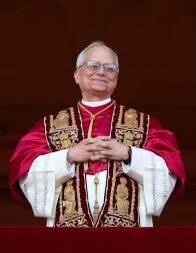
Pope Leo XIV on Wednesday said priestly ministry in the Catholic Church, entrusted only to men, is understood in light of apostolic succession and called for priests who are “ardent with evangelical charity” and “courageous missionaries.”
During his March 25 catechesis dedicated to the dogmatic constitution Lumen Gentium, from the Second Vatican Council, Leo explained that the Church “is founded on the apostles, whom Christ appointed as the living pillars of his mystical body.”
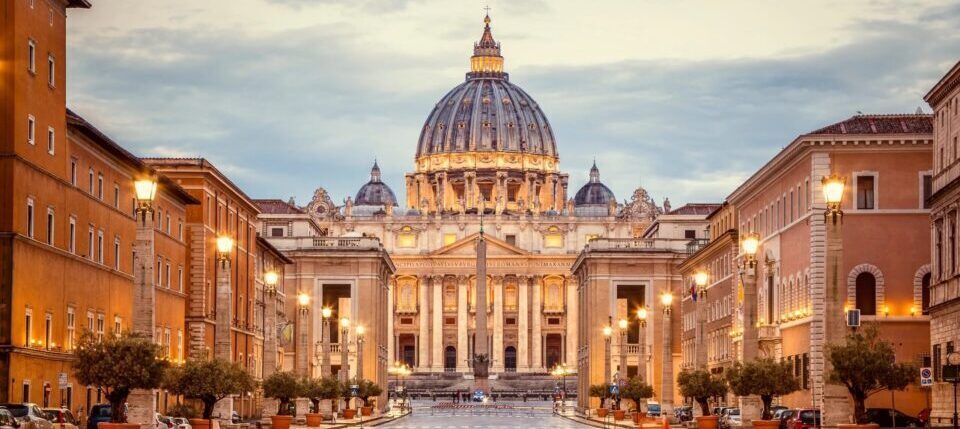
Speaking in St. Peter’s Square, the pontiff emphasized that the Church possesses a “hierarchical structure that works in the service of the unity, mission, and sanctification of all her members,” and that it is not merely an organizational structure but an institution of divine origin.
The pope recalled that the apostles, as authoritative witnesses of the Resurrection, received from Christ the mission to teach, sanctify, and guide, and that this ministry “is handed on to men who, until Christ’s return, continue to sanctify, guide, and instruct the Church ‘through their successors in pastoral office.’”
This transmission, he explained, forms the basis of apostolic succession and of the sacrament of holy orders, which is structured in three degrees: the episcopate, the presbyterate, and the diaconate.
The pope quoted from chapter 3 of Lumen Gentium, which is about the hierarchical structure of the Church, and states that this structure “is not a human construct, functional to the internal organization of the Church as a social body,” but a divine institution through which Christ’s mission continues throughout history.
THE ESSENTIAL DIFFERENCE OF THE MINISTERIAL PRIESTHOOD
In his address, the pontiff highlighted that Vatican II teaches that the ministerial or hierarchical priesthood “differs ‘in essence and not only in degree’ from the common priesthood of the faithful,” while making clear that the latter are “nonetheless interrelated: Each of them in its own special way is a participation in the one priesthood of Christ.”
Thus, the ordained ministry is conferred on men who receive “sacra potestas,” or sacred power, for service in the Church, in continuity with the apostolic mission originally entrusted to the Twelve Apostles.
This link with the apostles — chosen by Christ from among men — constitutes the theological foundation explaining why the Church considers the ministerial priesthood to be reserved to men, in fidelity to tradition and to the mandate received from Christ.
A SERVICE BORN FROM CHARITY
Leo insisted that this hierarchical structure must always be understood as service. Quoting the Second Vatican Council, he recalled that the duty entrusted to pastors “is a true service, which in sacred literature is significantly called ‘diakonia’ or ministry.”
He also recalled the words of St. Paul VI, who described the hierarchy as a reality “born of the charity of Christ, to fulfill, spread, and ensure the intact and fruitful transmission of the wealth of faith, examples, precepts, and charisms bequeathed by Christ to his Church.”
CALL FOR NEW PRIESTS
In the final part of his catechesis, the pope invited Catholics to pray for priestly vocations.
“Let us pray to the Lord that he may send to his Church ministers who are ardent with evangelical charity, dedicated to the good of all the baptized, and courageous missionaries in every part of the world,” he said.