“ Be assured of Christ’s closeness and His tenderness: He is not distant from what you are experiencing; on the contrary, He shares it and carries it with you.”
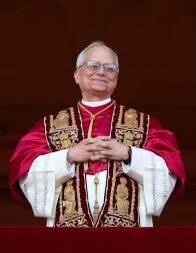
Pope Leo XIV offered this reassurance on Thursday when meeting in the Vatican with family members of those killed or injured by the tragic fire that struck Crans-Montana, Switzerland on January 1.
Swiss police report that at least 40 people died and 119 were injured, many seriously, following the fire and explosion that broke out in a bar of the ski resort town at a crowded New Year’s celebration.
Limits of human words
The Pope said he was “deeply moved” to meet the families, as he recognized that this time in which “one of the people most dear to you, most loved, has lost his or her life in a catastrophe of extreme violence, or is lying in hospital for a long period, with a body disfigured by the consequences of a terrible fire that has struck the imagination of the entire world” truly tries one’s faith.
He noted how it was a priority for him to meet with them when he learned of their interest.
Pope Leo expressed sadness that the tragedy happened on a day when everyone was rejoicing and celebrating, exchanging wishes of joy and happiness.
“What can one therefore say in such circumstances?” he wondered. “What meaning can be given to such events? Where can one find a consolation equal to what you are experiencing, a comfort that is not made up of empty and superficial words, but that touches deeply and rekindles hope?”
The Cross and the Resurrection
Only one reflection, the Pope suggested, is “adequate”: “that of the Son of God on the Cross—whom you are so close to today—who from the depths of His abandonment and His pain cried out to the Father: ‘My God, my God, why have you forsaken me?’ (Mt 27:46).”
The Father’s answer to the Son’s supplication, Pope Leo acknowledged, took three days to come, in silence. “But, then, what an answer it is!” he marveled. “Jesus rises again in glory, living forever in the joy and eternal light of Easter.”
The Pope lamented that he could not explain to them “why you and your loved ones have been asked to face such a trial.”
However, he added, “the Successor of Peter whom you have come to meet today affirms this to you with strength and conviction: your hope is not in vain, because Christ is truly risen!”
Pope Leo reassured them that nothing can separate them or their loved ones from the love of Christ.
Faith illuminates even the most painful moments
“The faith that dwells within us illuminates the darkest and most painful moments of our lives with an irreplaceable light, which helps us to continue courageously on our journey toward the goal.”
“Jesus,” he reassured, “goes before us on this path of death and resurrection, which requires patience and perseverance.”
The Pope reminded them that Christ is close to them and accompanying them, sharing in their emotions at this time, and that the whole Church is also with them.
“Be assured of the Church’s prayer—and of my personal prayer—for the repose of your deceased loved ones, for relief for those you love who are suffering, and for you yourselves, who accompany them with your tenderness and your love.”
Turn to Our Lady of Sorrows for maternal comfort
He acknowledged that their hearts today are pierced, as was the heart of Mary at the foot of the Cross, reiterating, “Mary, at the Cross, seeing her Son, Mary, Our Lady of Sorrows, is close to you in these days, and it is to her that I entrust you.”
Before imparting his Apostolic Blessing, the Holy Father reminded those gathered to turn to the Blessed Mother without reserve with their tears and to seek in her the maternal comfort. The Holy Father invited those present to join him in saying an Our Father and a Hail Mary.
Pope Leo’s continued closeness
The audience marks the latest gesture in Pope Leo’s showings of closeness to those affected.
In a telegram the day after the fire, Pope Leo had joined in mourning the victims of the fire, praying to the Lord “to welcome the deceased into his dwelling of peace and light, and to support the courage of those who suffer in their hearts or in their bodies.”
At the conclusion of his Angelus on Sunday, January 4, the Holy Father expressed once again his “closeness to those suffering” and assured his “prayers for the young people who died, for the injured, and for their families.”
Pope Leo meets families of victims of Crans-Montana fire
15 Thursday Jan 2026
NEWS